


by Mark Musick, Tilth Producers
Washington’s 729 certified organic farms are an economic powerhouse, generating $355.5 million in farmgate sales in 2012. Our state’s organic farmers grow a bountiful array of crops, leading the nation in the production of organic apples, pears and cherries. Certified organic acreage in Washington nearly doubled in the past 19 years, from 45,000 acres in 1995 to just under 85,000 acres in 2013.
From apples to zucchini, Washington is second only to California in the number of different crops that thrive in our diverse growing regions. The Tilth Producers Directory includes listings for tree fruits, berries, wine and table grapes, nuts, flowers, herbs, honey, garlic, potatoes, onions, squash, grains, legumes, mushrooms, dairy products, poultry and eggs, livestock and livestock feed, and a wide range of value added products.
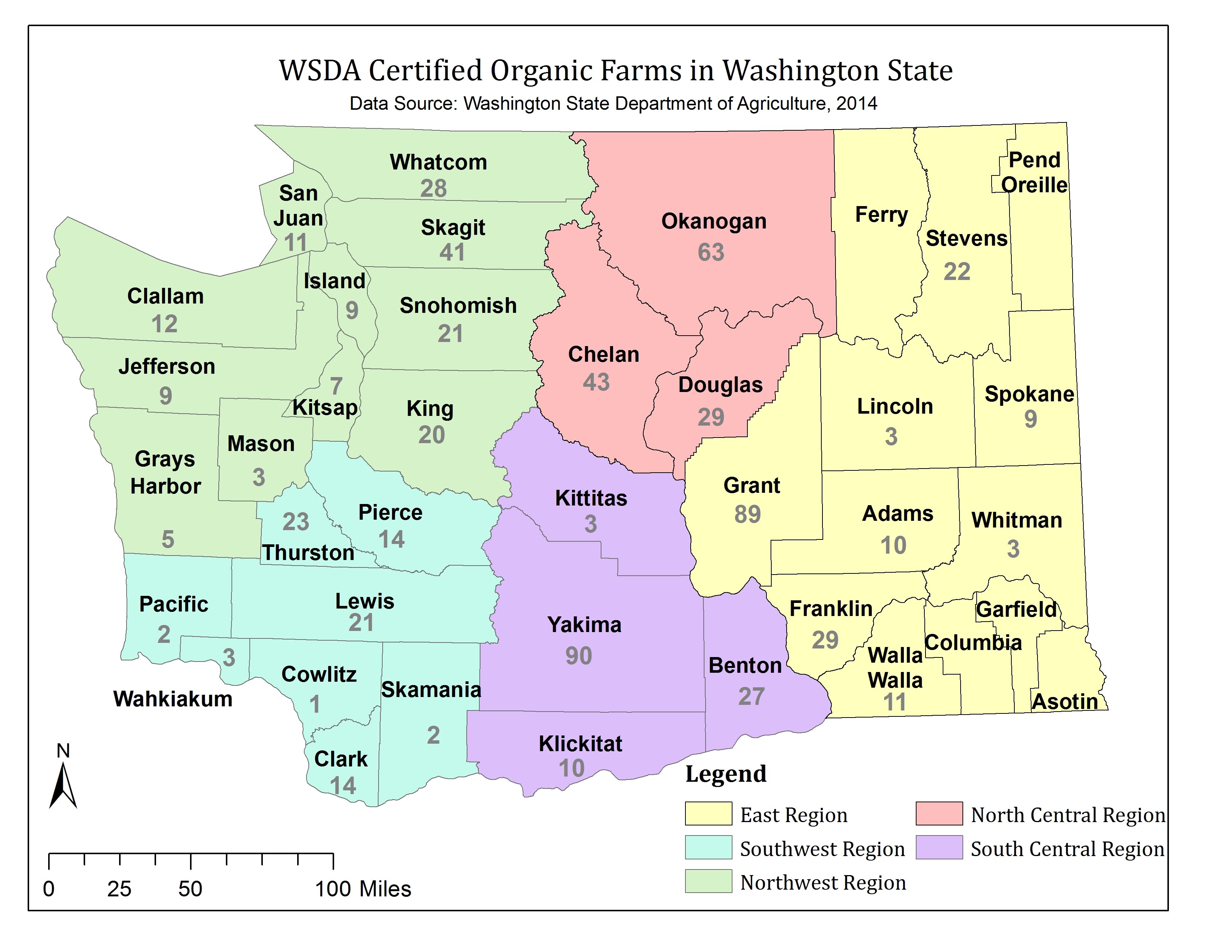
Eastern Washington accounts for most of our state’s organic production, with 63% of the certified farms, with 67% of the land area and 83% of total sales. Western Washington is home to 37% of our state’s certified organic farms, with 33% of the land area and 17% of total sales.
Grant County, located in the heart of the Columbia Basin, leads the state in organic production, with 2012 farmgate sales of $106.8 million. West of the Cascades, Skagit County leads with $14.2 million in sales.
Source: WSU CSANR
Washington Farming Regions
Click on the links below for detailed information on the soils, climate, and major crops in each region, plus farmer profiles.
- Eastern Washington
- North Central Washington
- Northwest Washington
- South Central Washington
- Southwest Washington
What is organic?
 The National Organic Standards Board adopted this definition in April 1995: “Organic agriculture is an ecological production management system that promotes and enhances biodiversity, biological cycles and soil biological activity. It is based on minimal use of off-farm inputs and on management practices that restore, maintain and enhance ecological harmony.”
How do I know if it really is organic?
 Any food labeled organic must meet USDA’s national organic standards and be verified through inspection by independent state or private organizations. Products labeled “100% Organic” and carrying an organic seal from USDA, Washington State Department of Agriculture or Oregon Tilth are just that–they contain all organically produced ingredients. Fruits and vegetables with this label are always 100% organic. Processed products that are
  made from at least 95% organic ingredients may also carry the organic seal, as long as the remaining ingredients are approved for use in organic products. Products that contain at least 70% organic ingredients may label those ingredients individually as organic in the ingredient list, but will not carry an organic seal.
Focus on Organic Agriculture in the state of Washington
Growing Organic Grains
Growing Organic Apples & Pears
Growing Organic Vegetables
Growing Organic Wine Grapes
Organic Dairy Farming